
In the weeks ahead, newspapers and news sites in Sweden will be chock full of politics. Every 30-second interview with a party leader, every opinion piece by a party sympathiser, every closed-door meeting, every parliamentary vote, will be pored over for signs of movement towards a future government.
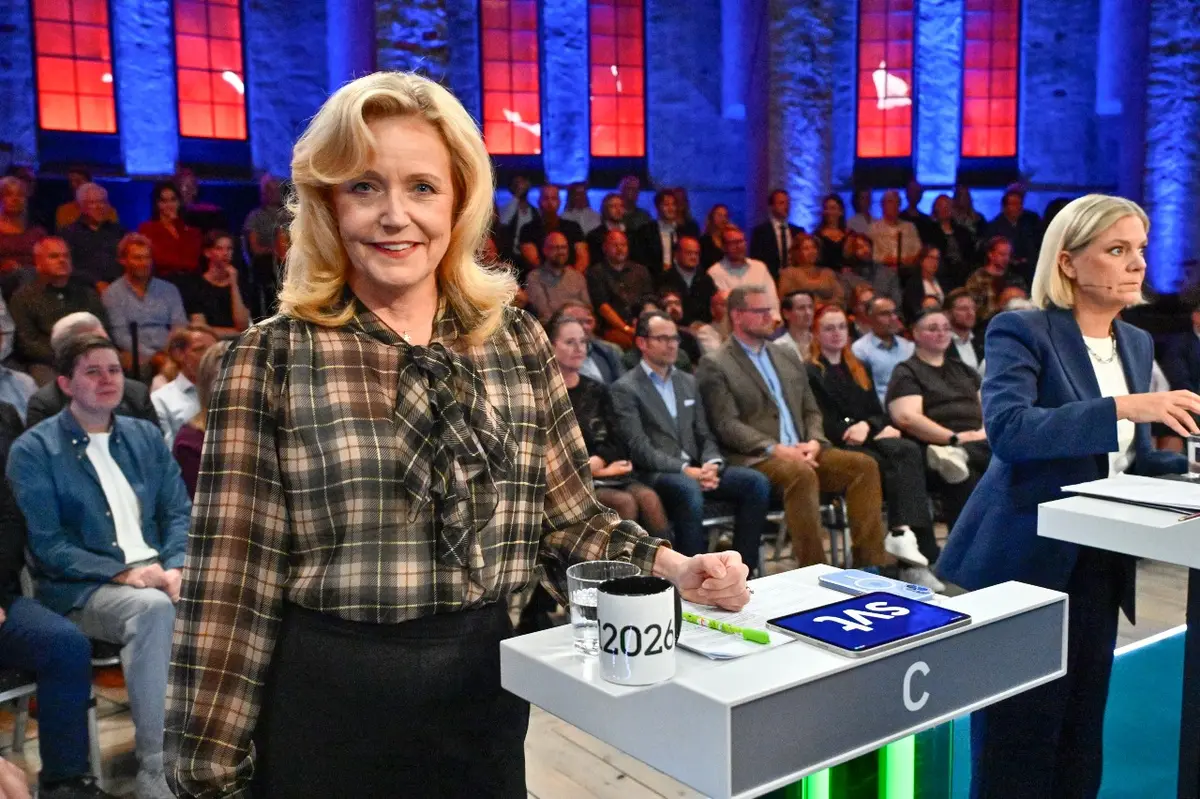
And almost none of it will matter, or at least not much, because everything in the end boils down to one simple question: what does the Centre Party – and more specifically its leader Elizabeth Thand-Ringqvist – actually want?
Does she genuinely want the government her party campaigned for in the election? One led by Social Democrat leader Magdalena Andersson, but without Left Party ministers. We can include in this the unlikely centrist alternative that includes the Christian Democrats and Liberals.
Is she almost indifferent to who leads the next government and even perhaps to which parties support it, so long as she maximises her party's influence?
Or is she actively bedding the way for a shift to the right, to return her party to the Alliance group of parties it shattered when it backed a Social Democrat prime minister in 2018 – even though this will mean accepting the influence of the far-right Sweden Democrats?
As Thand Ringqvist this week meets other party leaders in her role as sonderingsperson, the person responsible for probing different government alternatives, the situation looks different depending on which of these is true.
If she wants Andersson as PM, she must do one of three things: succeed in getting the Left Party to drop its demands for ministers; abandon her own party's demand that the Left Party doesn't have ministers; or convince both the Christian Democrats and the Liberals to support Magdalena Andersson. If she fails this week to find support for her centrist alternative including the Liberals and the Christian Democrats (which she will) it will help her, argue those who believe this is her aim. It will show that she's done everything she can to find a solution in the centre, justifying some sort of compromise over Left Party ministers.
If she is preparing to flip sides, on the other hand, she has to make sure the Left Party doesn't drop its demand for ministers as if it does it will be difficult to justify accepting Sweden Democrat influence, however much she talks about incompatible ideologies. She would also need to get the right-wing parties, and particularly the Sweden Democrats, to accept sufficiently painful concessions, perhaps by rolling back some of Tidö's immigration reforms. Once again, failing to put together a centrist alternative this week will help. She can point to positive talks she has had with other right-wing leaders and the continuing obstructiveness of the Left Party.
Finally, if she is motivated by ministerial posts and policy influence alone, what matters is to convince the other parties – and particularly the Social Democrats and Moderates – that she's for real. She can swing both ways. She can't do this while she still rules out supporting or joining a government with Sweden Democrat influence. Again, if her centrist alternative fails (which it will), it might make it easier to justify dropping this red line (especially if her talks with Sweden Democrat leader Jimmie Åkesson go well).
Which of the three is most likely?
The chances of the Centre Party shifting sides has been played down by political commentators, who argue its opposition to the Sweden Democrats is too deeply rooted. Its voters overwhelmingly oppose joining or supporting a government with Sweden Democrat influence, they point out. It would be severely punished if it betrayed them.
They perhaps underestimate, though, the price the Centre Party has paid for tying itself to the left-wing parties. For the most economically liberal party in the Swedish parliament, there's a steep policy price, of course. But there's also a strategic one. In 2018, the party threw away a kingmaker position it could have used to win policy influence far beyond its size (as the Social Liberal Party long has in Denmark). Dropping its opposition to Sweden Democrat influence would win it back.
It also ignores the way Thand Ringqvist's predecessor, Muharrem Demirok, was forced out, partly for saying he supported Social Democrat leader Magdalena Andersson as his prime ministerial candidate. Thand Ringqvist, who Demirok originally beat to the leadership, is to the right of the party with a background in business lobby organisations.
So what should we look out for in the coming weeks?
The tricky thing is that Thand Ringqvist and her party will behave in pretty much exactly the same way regardless, as has has been the case ever since the election.
Was Thand Ringqvist's sauna with Christian Democrat leader Ebba Busch (which Aftonbladet just happened to find out about) a steamier version of Busch's meatball lunch with Sweden Democrat leader Jimmie Åkesson back in 2019, and so the first step in a move to the right? Or was it a way of scaring the Left Party into capitulation?
Was the policy conference she organised for the Social Democrats, Left Party, and Green Party, a genuine attempt to open the way to a Social Democrat-led government, or the opposite: a way of seeming cooperative while highlighting the insurmountable policy disagreements?
When Matilda Molander, the head of Fores, the think tank started by Centre Party economic spokesperson Martin Ådahl, argued in Dagens Industri that Moderate leader Ulf Kristersson would need to offer "a green, liberal policy programme" to win the party's backing, was that an opening up to the right (she only ruled out Sweden Democrat ministers), or a way of stressing the impossibility of a shared policy programme (she suggested the party might demand the end of the work permit salary requirement, the return of the "particularly distressing circumstances" safety clause, and an increase in the number of quota refugees)?
When, in the debate article she published in the Svenska Dagbladet newspaper today on her attempt to negotiate a coalition, she write "voters deserve serious politicians who thoroughly investigate all possibilities" (my italics), is she calling on Christian Democrats and Liberal Parties to consider backing Andersson or arguing her own party should be open to moving the other way?
It will be interesting to hear what Thand Ringqvist says when she reports back on her talks with the other parties.
Will she step up the conflict levels with the Left Party or try to seek areas of agreement? An ultimatum over ministerial posts, which is unlikely just yet, could be a genuine attempt to break the deadlock, or it could be a way of blaming the Left for a future shift to the right.
What will she say about the Christian Democrats and Liberals after their meetings? If her words are warm, could it again be a sign of a step to the right, or would it again, be a way of putting pressure on the Left Party?
More importantly, what language will she use about Sweden Democrat leader Jimmie Åkesson after their meeting? It's worth remembering that her predecessor Annie Lööf refused to meet him with him at all when she was sonderingsperson in 2018. Describing talks as "constructive" or something similar might be a sign her party's red line is weakening, or it could (again) be a way of pushing the Left Party to concede.
The truth is that we still won't know what Thand Ringqvist really wants even after she's given up on the task of forming a new government and handed over to someone else. The best way to find out would be for the Left Party to call her bluff. If they drop their hard demand for ministerial positions, she'll be forced to show her cards.
Politics in Sweden is The Local's weekly analysis, guide or look ahead to what's coming up in Swedish politics. Update your newsletter settings to receive it directly to your inbox.
Comments